Gravel to Asphalt Driveway Conversion in Rockford, IL
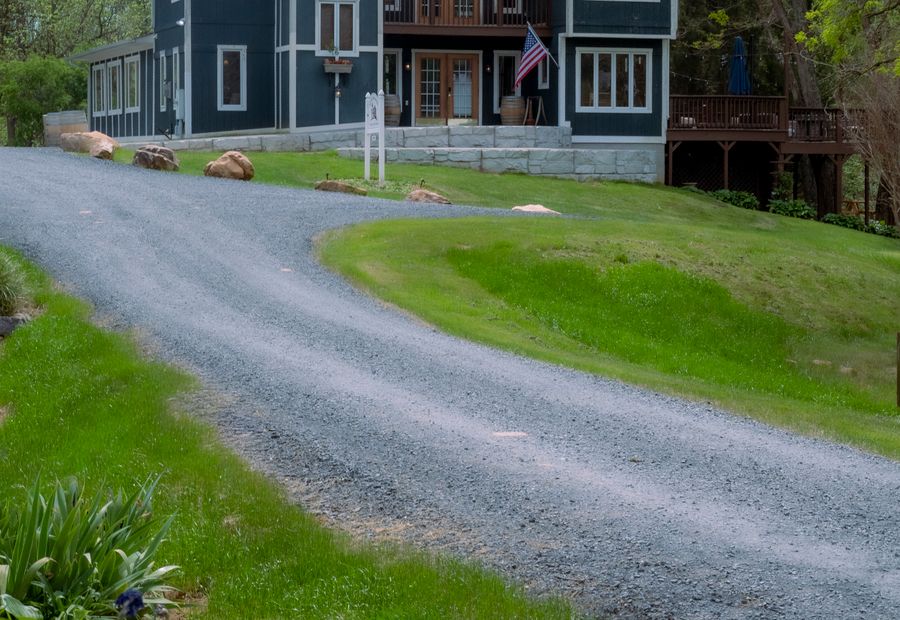
Rockford Driveway Paving converts gravel driveways to asphalt, and also does driveway replacement, resurfacing, patching, new paving, sealcoating, extensions, and parking lots. We pave rural lanes, farm approaches, and long acreage drives across Winnebago, Poplar Grove, Rockton, Cherry Valley, and Winnebago and Boone counties, Illinois.
Converting a gravel drive is mostly earthwork. We grade and reclaim the existing rock, proof-roll the subgrade to find the soft ground a gravel surface has been hiding, lay geotextile fabric where the clay will not hold, and build the base back up with CA-6 crushed stone compacted in thin lifts. Hot mix follows in two courses. Compare that with a mat of asphalt laid straight onto old drive rock. The rock rolls under the roller instead of locking, and the driveway alligators over every soft spot within a few winters.
Why the Gravel Is Not the Base
Base stone works because it holds every size from coarse rock down to dust, so the fines fill the gaps and the whole layer locks solid. Driveway gravel is usually washed and rounded, chosen so it drains and stays loose. It never locks. On top of that, a decade of tires has driven much of it into the clay below, so the depth on the surface is not the depth in the ground.
Where the Cost Sits on a Long Lane
Length is obvious. Width is the one people forget, and it multiplies straight into the square footage. After that comes grading, because a lane that has been graded by a tractor for twenty years rarely has the shape asphalt needs. Then ditching, then the culvert at the road. We walk the whole run and price the parts separately so you can see what is driveable.
Water Off a Rural Drive
A gravel lane sheds water by being crowned. An asphalt lane sheds it by pitch and by having somewhere for the water to go. Shoulders get built up level with the new edge, and ditches get cut or cleaned so the runoff has a route. Skip that and the edges of the new lane undercut from the sides.
Timing
Conversions run in the hot mix season, roughly May through October, and the earthwork half needs ground that is neither frozen nor saturated. Spring rain moves start dates on rural jobs more than anything else. We measure and quote year round. Call (815) 555-0155 and we will drive the lane.
Can you pave right over my existing gravel?
Rarely, and it is the most expensive assumption in this job. Most gravel driveways are loose rounded rock with no fine material to lock it together, and years of traffic have pressed a good share of it down into the clay. It is a driving surface, not a base. We test what is there, reclaim what is usable, and bring the depth up with angular crushed stone. Occasionally a well-built lane already has most of what it needs, and we will say so when it does.
How much does it cost to pave a long rural driveway?
Square footage decides it, and a long lane has a great deal of it. Width matters as much as length, so a lane widened for passing costs noticeably more than a single-track one of the same distance. Ditching, culverts at the road, and grading a lane that has developed a crown or a ruts pattern all add. We measure the whole run rather than quoting a per-foot number over the phone.
Is it worth keeping the gravel driveway instead?
Sometimes, and we will tell you when. A gravel lane that is graded properly, crowned so water leaves it, ditched on both sides, and topped up with the right angular stone performs well and costs a fraction of asphalt. It needs regrading every few years and it needs dust control. If the length makes asphalt hard to justify, rebuilding the gravel properly is our recommendation.
What about the culvert where the driveway meets the road?
A rural entrance usually needs a pipe under it so the roadside ditch keeps flowing. If yours is crushed, plugged, or too short for the width you want, that gets sorted before paving, because digging it out afterward means cutting the new surface. The road right-of-way belongs to the township, the county, or the state depending on the road, and we confirm which office signs off before the work starts.