Asphalt Patching and Repair in Rockford, IL
Rockford Driveway Paving is an asphalt contractor doing driveway patching and repair, full-depth pothole work, crack filling, sunken section rebuilds, apron and edge repair, driveway replacement, resurfacing, sealcoating, and parking lot work. We repair driveways for homeowners across Rockford, Machesney Park, Roscoe, Rockton, Belvidere, and Winnebago and Boone counties, Illinois.
A permanent pothole repair is a small replacement. We saw the failed area into a square, dig out the broken asphalt and whatever soft material sits under it, bring the base back up with compacted stone, then fill with hot mix asphalt and compact it flush with the surrounding surface. Working cracks get cleaned out and filled with hot rubberized crack filler, which melts in and stays flexible through a Rockford winter rather than shrinking away like cold pourable filler does. Set that against a shovel of cold patch tipped into a hole and pressed down with a truck tire.
Reading What Broke
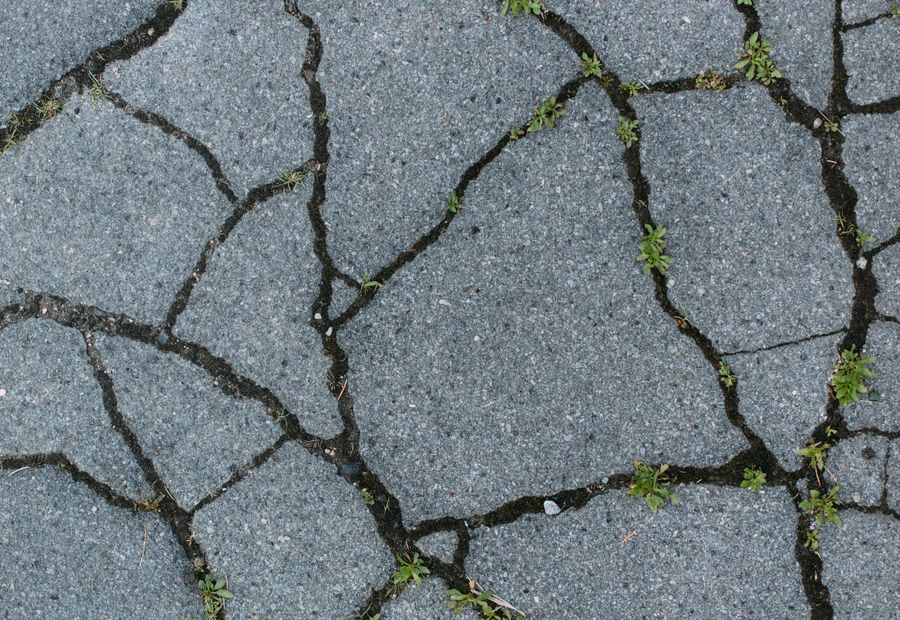
Single long cracks are the driveway expanding and contracting. Those get filled. A connected web of cracks is the base underneath failing, and no filler reaches that. A hole with clean broken edges is usually water freezing under a crack and lifting a piece out. A sunken area is a void or soft ground below. We look before we quote, because these four things get four different answers.
Edges and Aprons
Asphalt has nothing holding its edge, so edges crumble first. Add a plow blade catching a lip every winter and the loss speeds up. We cut the ragged edge back to sound material, rebuild the base out past where the asphalt will sit, repave, and bring soil up level with the new edge so nothing stands proud. The apron at the street takes the same treatment, with the road authority confirmed first.
When Repair Stops Paying
Patches are cost-effective while they stay isolated. Once you are patching four or five areas a season, once alligatoring covers a big share of the surface, or once the drive holds water in ruts after a rain, the repairs add up past the price of doing it once. We will say that plainly rather than sell you another round of patches.
Timing
Hot mix repairs run roughly May through October while the plants are open. Crack filling has a wider window than paving does. Spring is when most of this work turns up, because the frost comes out of the ground and every weakness in the driveway shows itself at once. Call (815) 555-0155 to get on the list.
Is cold patch a permanent pothole repair?
No. Cold patch is asphalt mixed to stay workable at air temperature, and it stays workable, which is exactly the problem. It never reaches the density hot mix reaches under a roller, so traffic pushes it out of the hole and water gets back underneath. It is genuinely useful as a stopgap through winter when no plant is running. A permanent repair gets cut square, dug to solid ground, and filled with hot mix compacted in place.
When is a crack worth filling?
Fill it while it is still a line you can trace. A single crack running across or along the drive is a working joint, and hot rubberized filler poured into it keeps water out of the base. Once cracks connect into a web, or once you can fit a finger into one, filling stops being useful. At that point water has already been reaching the base for a while and the driveway needs a bigger conversation.
Why has one section of my driveway sunk?
Something under that section gave way. The usual suspects are a utility trench that was backfilled loose, a soft clay pocket that was never compacted, a base that was too thin from the start, or water finding a path under that one spot. Filling the low area with asphalt levels the picture and leaves the cause underneath. We dig it out, find what is down there, rebuild the base, and repave the area.
How do you repair the driveway after a utility dig?
A trench cut is a straight-sided hole with loose backfill in it, so it settles for months after the crew leaves. We compact the backfill properly, bring stone up to depth, and pave the cut with hot mix in a lift that matches the surrounding surface. The seams get sealed. A trench patched by dropping mix onto uncompacted fill sinks into a long shallow ditch and cracks along both edges.