Asphalt Driveway Replacement in Rockford, IL
Rockford Driveway Paving is an asphalt contractor doing full-depth driveway replacement, resurfacing and overlays, patching and crack repair, new paving, sealcoating, gravel conversion, driveway extensions, and parking lots. We replace driveways for houses, subdivision lots, and rural acreages across Rockford, Loves Park, Machesney Park, Belvidere, Roscoe, Rockton, and Winnebago and Boone counties, Illinois.
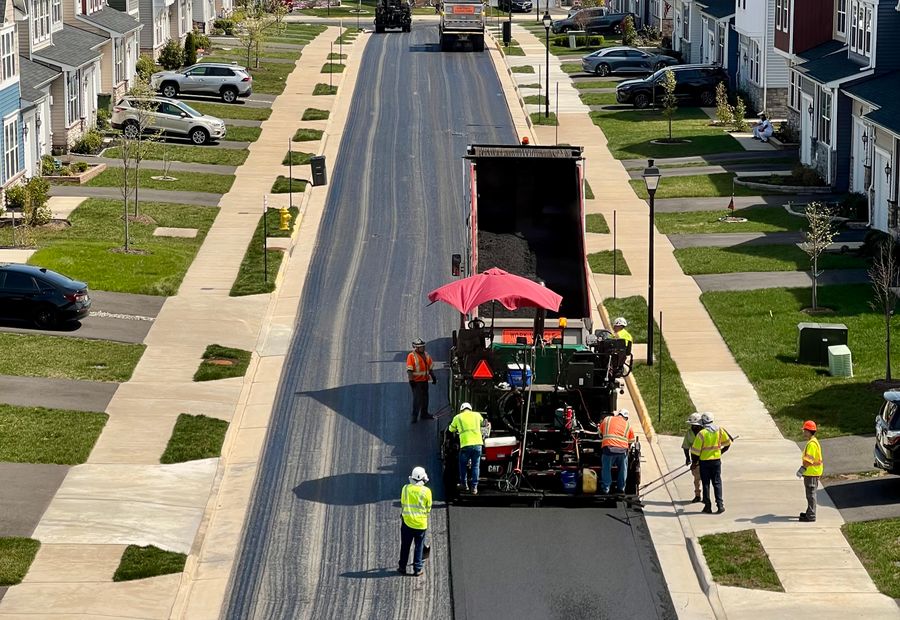
A replacement here is a rebuild from the dirt up. The old surface gets milled or broken out and hauled away as reclaimed asphalt pavement, which is crushed and goes back into new mix. The subgrade underneath gets compacted and proof-rolled. Then CA-6 crushed stone goes in as thin lifts, six to eight inches of it, each lift run over with a plate compactor and a steel drum roller before the next one lands. Hot mix follows in two courses: a coarser binder course carrying the load, then a finer surface course over it. Compare that against two inches of hot mix rolled over a driveway that is already cracked through.
Alligator Cracking Means the Base Is Gone
A web of connected cracks across the surface is the ground underneath moving under load. It is not surface wear. Ruts, standing water after a rain, crumbled edges, and a drive that has visibly dropped all point the same direction. Nothing laid on top of that reaches the problem. Old cracks work up through a new layer in the same lines within a few years, which is reflective cracking, and it is why a second cheap fix costs more than one correct one.
Match the Fix to the Failure
| Condition | Correct fix |
|---|---|
| Sound surface, gray, hairline cracks | Crack fill, then seal |
| Isolated potholes, rest is solid | Full-depth patches |
| Cracked on top, solid base, drains well | Overlay |
| Alligatored, rutted, ponding, edges gone | Full replacement |
Pitch, Edges, and Grade
We set fall across the driveway so water leaves rather than stands, because water that sits soaks the base and then freezes in it. Edges get the stone run out past the asphalt, raked to a taper, and backfilled level with soil. And a replacement resets your grade instead of raising it, so the garage door still clears and the apron still meets the street flush.
Price and Season
Replacement prices per square foot. Size, both compacted depths, tear-out and trucking, grading, access, and drainage move it. Paving runs roughly May through October because hot mix will not reach density on cold ground, and the plants close for winter. We measure and quote in any month, and the schedule fills from spring. (815) 555-0155 reaches a person.
How much does a 2,000 square foot asphalt driveway cost?
Asphalt is priced per square foot, so start by multiplying your width by your length. A driveway that size lands in the low five figures for a full replacement in this market, and less for a first pave on ground that has never been surfaced. The spread inside that range comes from real things: how thick the compacted asphalt goes, how deep the compacted base goes, whether an old driveway has to come out and get trucked away, how much grading it takes to build fall into the surface, whether a paver and a triaxle can reach the work, and whether water has to be sent somewhere. Ask each bidder to write those items down and the range stops being mysterious.
Can you put a new layer of asphalt over old asphalt?
Sometimes, and on the right driveway it is a good buy. The conditions are narrow. A solid base, a surface that drains with no standing water, no ruts, and no alligator cracking anywhere on it. Miss one of those and the old cracks travel up through the new layer and reappear in the same web within a few years. There is also a height problem nobody warns homeowners about: a new layer lifts the surface about two inches, which can bury the bottom of a garage door and leave a lip where the driveway meets the street.
Is 2 inches of asphalt enough for a driveway?
Two inches compacted is the right thickness for a surface course or an overlay. On its own it is not a driveway. Built from the ground up, a residential drive wants three to four inches of compacted asphalt laid in two courses, over six to eight inches of compacted stone. Watch the word compacted. A roller squeezes roughly a quarter of the depth out of hot mix, so two inches off the truck finishes at closer to an inch and a half.
What causes alligator cracking in a driveway?
The base under the asphalt has failed. Water reached it, or it was too shallow, or it never got compacted, or the driveway is carrying weight it was never built for. The asphalt breaks into that connected web because it has nothing solid left to spread load into. It is the one pattern that points at replacement rather than resurfacing, because sealer, filler, and a new overlay all sit above the part that is actually broken.