Asphalt Resurfacing and Overlays in Rockford, IL
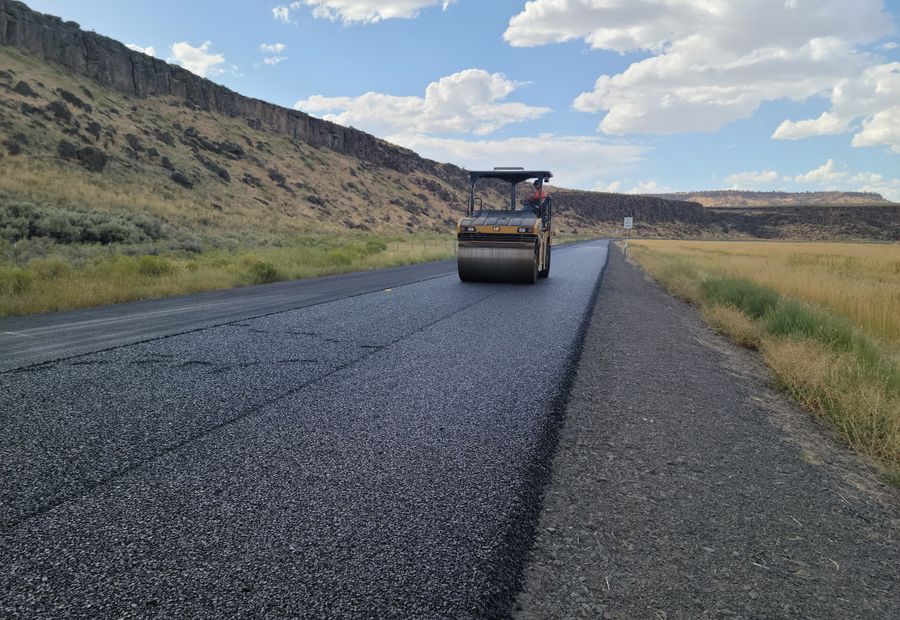
Rockford Driveway Paving is a paving contractor doing asphalt resurfacing and overlays, full driveway replacement, patching, new driveway paving, gravel conversion, extensions, sealcoating, and parking lot work. We resurface driveways and small lots for homeowners and property owners in Rockford, Cherry Valley, Loves Park, Poplar Grove, Winnebago, and across Winnebago and Boone counties, Illinois.
An overlay is one new surface course of hot mix, roughly two inches compacted, bonded to the old driveway with tack coat sprayed across it first. Before it goes down we mill a strip at the garage and at the street so the finished mat ties back into the original grade, and we cut out and rebuild any area that has broken through. That is the whole method. Set it against a mat rolled straight over standing cracks with no tack, no milling, and no patching, then judge the two prices differently.
When an Overlay Is the Right Call
Four things have to be true. The base is solid. Water runs off the surface with no ponding. There are no ruts pressed into the wheel tracks. And there is no alligator cracking anywhere on the drive. Meet all four and resurfacing gives you most of a new driveway for a fraction of the price. Miss one and you are buying the same job twice.
Reflective Cracking, Explained Once
Cracks in the old surface are still moving. Heat opens them, cold closes them, and frost lifts the ground beneath them. A new layer laid across the top gets worked by that movement from below, and it splits along the same lines. Within a few years the new driveway wears the old driveway's crack map. Hot mix does not stop that. Only removing what is broken does.
Milling and What Comes Off
Milling grinds a set depth off the existing surface. We use it at transitions so the grade does not rise where it matters, and across a whole surface where the old asphalt is too high or too rough to build on. The grindings leave as reclaimed asphalt pavement and go back into the supply chain rather than into a pile behind your garage.
Life, Price, and Timing
Resurfacing costs less per square foot than replacement because nothing gets torn out and hauled off. It also lasts a shorter time, and the gap between the two widens fast when the base is marginal. We will tell you which one your driveway has earned before we write a number. Resurfacing runs in the same window as everything else, roughly May through October, because the mat has to be rolled hot to reach density. Call (815) 555-0155 and we will come look.
How long does an asphalt overlay last?
On a driveway with a genuinely solid base, an overlay commonly runs eight to twelve years before it wants attention again, and longer with crack filling and sealing on schedule. A full replacement runs longer than that because it rebuilds the part carrying the load. Put an overlay on a base that has already failed and the number drops to a few years, because the cracks underneath come straight back up through it.
What is tack coat and why does it matter?
Tack coat is a thin sprayed layer of asphalt emulsion applied to the old surface right before the new mat goes down. It glues the two layers into one. Skip it and you have two separate slabs stacked on each other, and the top one slides, shoves, and peels at the edges under braking and turning wheels. It costs very little and it is the difference between a bonded overlay and a loose one.
Will resurfacing raise my driveway?
Yes, by roughly two inches, which is why we check two places first. At the garage, that height can reach the bottom of the door and put water at the threshold. At the street, it leaves a lip where your driveway meets the pavement. Milling a strip off the existing surface at both transitions solves it, so the new mat feathers back down to the original grade at each end.
Do you have to fix potholes before an overlay?
Yes, and full depth. Any area that has broken through gets cut out, dug down to solid material, and filled with hot mix compacted in place before the overlay goes on. Paving over a soft spot buries it for a season. The new surface then sinks over that exact spot and cracks around it, and the repair is more expensive than doing it in the right order would have been.